Wondering how to identify lab grown diamonds from natural diamonds?
You’re in the right place.
In this Learning Guide, I’ll answer the top questions about identifying synthetic diamonds and a mined diamonds like:
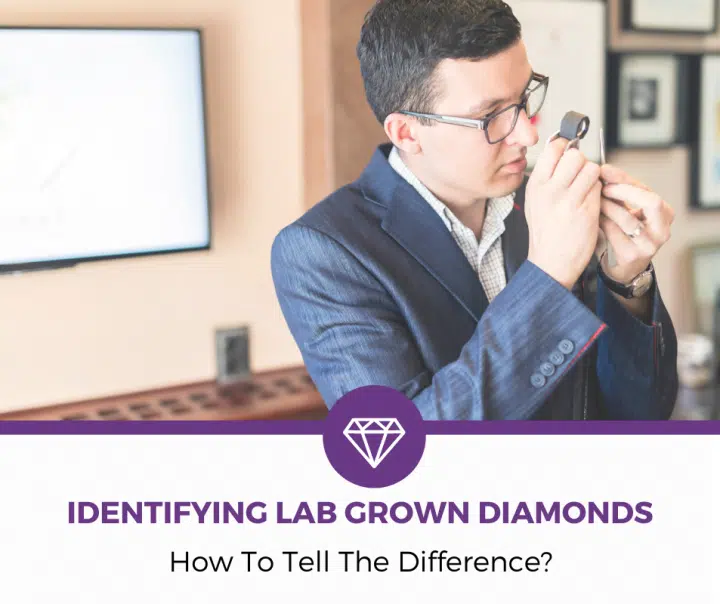
- Can You Tell The Difference Between Lab Grown Diamonds and Mined Diamonds?
- Are Lab Grown Diamonds The Same As Natural Diamonds?
- Where To Identify Lab Grown Diamonds?
What are Lab Created Diamonds?
Lab grown diamonds are mainly made up of two ways: high pressure high temperature (HPHT) or chemical vapor deposition (CVD).
Both processes involve chambers and a diamond seed. An HPHT synthetic diamond can use hpht diamonds, natural diamonds, or a cvd diamond seed in its growth process.
The CVD creation process only uses diamond seeds that are Type IIa. Diamonds that have been marked as Type IIa don’t have any nitrogen or boron impurities.
So what does that mean?
Type IIa natural diamonds are made up of pure carbon atoms. They’re also rare, because only 1-2% of rough diamond crystal in the diamond industry is a Type IIa diamond.
Quite simply, a CVD diamond seed is top-notch.
However, HPHT laboratory grown diamonds are capable of producing diamonds that are equality in quality to CVD diamonds.
Neither one is actually better than the other.
Read also: HPHT Diamonds vs CVD Diamonds
Are Lab Created Diamonds Real Diamonds?
It’s a good thing people are starting to learn more about synthetic diamonds. They go by a hundred names it seems, each one more out there than the next.
Lab created diamonds may be referred to as:
- Synthetic diamond
- Man Made diamond
- Cultured Diamond
- Created Diamond
Cultured diamonds? Come on. They’re not pearls, people.
The biggest confusion among diamond buyers is the thought that lab created diamonds are fake diamonds, or even diamond simulants.
Lab grown diamonds are real diamonds. They have the same physical, chemical, and optical properties as earth grown diamonds.
The same goes for a lab grown stone like a sapphire. They are the same composition as natural sapphires, but are still created.
Growing diamonds is a much quicker process than waiting billions of years for gem-quality mined diamonds.
The main difference between the two is where they come from: one involves diamond mining and the other is created in a laboratory environment.
They’re not what you think when it comes to what is a simulated diamond either. Simulated diamonds or diamond alternatives are usually referring to other colorless gemstones or man made material. These stones may be purposefully chosen or they can be a shady practice.
The most popular diamond simulants are:
- Moissanite
- Cubic Zirconia
- White Sapphire
- White Topaz
- White Zircon
The difference between a simulated diamond and a man made diamond is that simulated diamonds don’t have the same brilliance, durability, or chemical makeup as an earth made diamond.
Lab created diamonds do.
Can You Tell The Difference Between a Lab Created Diamond and a Mined Diamond?
One of the biggest questions about lab grown diamonds is how to tell them apart from earth mined diamonds.
The ethically conscious want to ensure there’s no chance they’re participating in conflict diamond practices.
The good news is that even though we only recommend engagement ring brands that follow the Kimberley Process, some people just want to feel more confident buying ethical engagement rings. That’s okay!
I’ve got good news and bad news.
The good news is that even if someone was trying to sell you a conflict diamond, they’re not going to do it at lab grown diamond prices. People that run these schemes know there’s always another buyer that will take it at another price, sadly.
Now, here’s the bad news.
You can’t identify the difference between lab diamonds and mined diamonds. On a diamond tester, both types of diamonds will test as a diamond.
Before you start freaking out on me, hear me out…
You, as a customer, can’t properly identify a lab diamond from a natural diamond.
Why?
Remember how I said synthetic diamonds have the optical attributes as natural diamonds? That means that you can’t visually see a difference between a lab diamond and mined diamond with the same diamond grades.
You may not be able to hold up a lab diamond and mined diamond and know which is which, but a trained gemologist or diamond expert can.
How Do Gemologists Identify Lab Grown Diamonds From Natural Diamonds?
First, it has to be understood not all gemologists can identify lab grown diamonds. The most respected gemologist degree in the jewelry industry comes from the Gemological Institute of America’s (GIA) Graduate Gemologist (GG) Degree.
However, just because someone possesses that degree, doesn’t mean they specialize in identifying lab diamonds. They may have had to identify them in their studies, but who knows if they’re a pro at it.
Some local jewelers may have the equipment needed to identify lab created diamonds. Here’s a few ways a gemologist or jeweler can help you identify lab diamonds.
1. Fluorescence
Even if you purchased a lab diamond with no fluorescence, a gemologist can make your diamond fluoresce by using the Diamond View machine at the GIA. The GIA created this machine in order to identify lab grown diamonds.
The Diamond View Machine can help identify lab diamonds by using the fluorescent image of the diamond. The machine makes the diamond glow blue under its UV light.
Lab grown diamonds glow a little brighter than natural diamond fluorescence. HPHT diamonds will glow a brighter blue and CVD diamonds will fluoresce orange.
Keep in mind, not all diamonds fluoresce.
2. Growth Patterns
Using the same fluorescent image from the Diamond View Machine, it creates a scan of the diamond into a computer. Gemologists are able to use the image and detect growth patterns of lab grown diamonds.
You see, lab grown diamonds and earth made diamonds have the same durability and hardness, but their original growth formations are different.
3. Phosphorescence
Diamond phosphorescence is also measured by the GIA’s Diamond View machine. Phosphorescence is the glow left over after the UV light’s been taken out of the picture. It’s more rare, only found in .001% of diamonds.
That’s why there’s multiple tests to do-just in case one way doesn’t apply as well.
4. Inclusions
Let me start by saying this isn’t a foolproof method of detecting lab diamonds. If you buy from a clarity grade that doesn’t have any inclusions under magnification like a VVS diamond or higher, they might have a tougher time knowing. After all, that’s one of the reasons why VVS diamonds have such a high price.
But if you have an actual diamond grading lab identify it, they have better ways of detecting the smallest blemishes.
Lab grown diamonds are less likely to have as many different inclusions as an earth mined diamond would. A mined diamond is created in the earth, where all types of minerals and impurities seep into the crystal growing process. The diamond crystal simply grows around them.
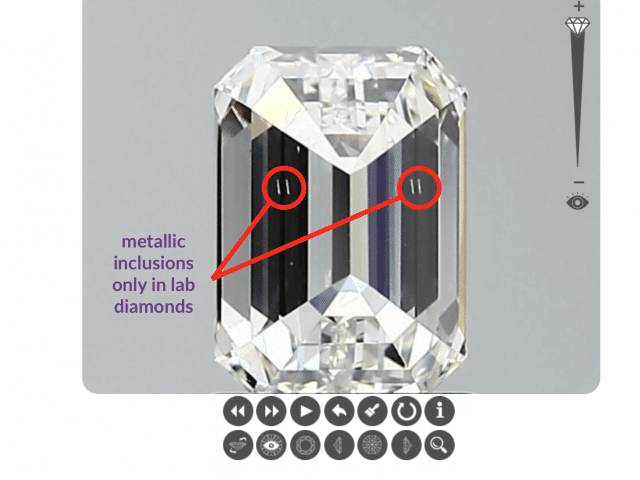
Synthetic diamonds are isolated in their lab environment, so they’re very limited with what they come in contact with. There’s many different types of inclusions, but lab grown diamonds are known for having graining patterns or metallic inclusion made of graphite.
5. Type II Diamond Machine
Not all jewelers or gemologists are going to have this on standby. A Type II diamond machine pretty much does what it says: It detects Type II diamonds.
How To Identify Lab Grown Diamonds as a Customer
Buy A Certified Lab Grown Diamond
I know I said that you can’t identify lab grown diamonds as a customer and that’s partly true. You can’t look at a diamond and know it’s one or the other.
But if you purchase a certified lab grown diamond, your grading report will indicate it. It’ll most likely tell you which creation process was used too.
However, not all grading labs are good ones. You should make sure you’re buying the right diamond certifications for lab grown diamonds.
There’s more reputable grading labs for lab grown diamonds than natural diamonds. For natural diamonds, I recommend only buying GIA certified or AGS certified diamonds.
If you’re on the market for a lab diamond you might want to know which online store we consider to be the best diamond seller right now.
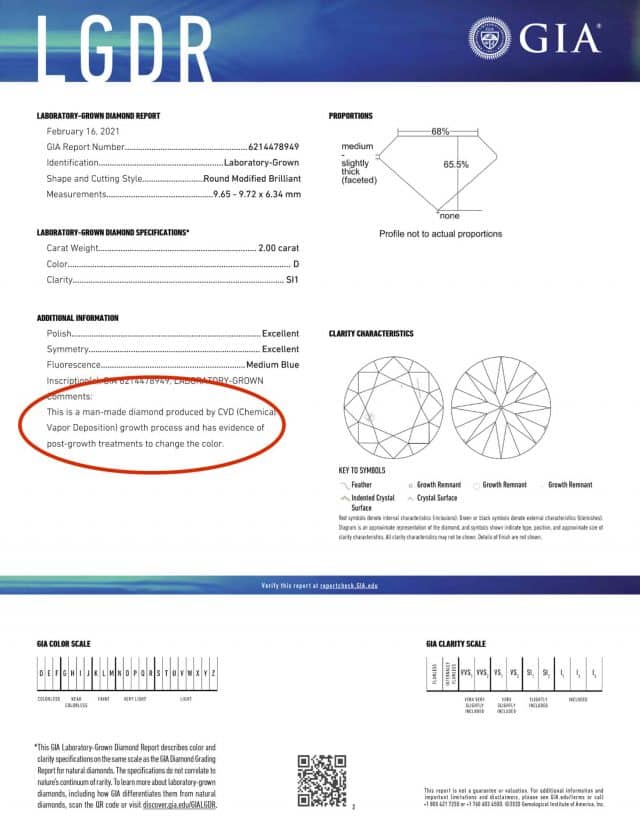
A grading report will let the buyer know they are purchasing a diamond with the exact grades they’re paying for. Grading reports can be faked, come from unknown labs, or brands who certify their own diamonds, like Diamond Foundry.
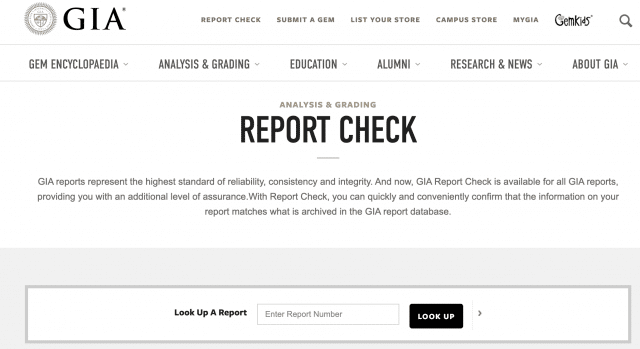
However, as long as your lab diamond engagement ring is being bought from a reputable retailer, you won’t run into fakes. You should be able to take the diamond’s report number and type it into the grading lab’s website.
Send It Off To A Grading Lab
If you’re not sure if a diamond is lab grown or natural, there’s a grading lab for that.
If you have a diamond engagement ring already and you want to get it certified, you can do that too. GIA certified or AGS certified natural diamonds are valued highest out of natural colorless diamonds.
I recommend sending both lab grown diamonds and natural diamonds to the GIA for grading.
You’ll have to send your unmounted diamond to their grading facility. It costs around $125 for a lab diamond report. They also have lab created fancy color diamond reports.
If you’re looking for a less expensive place to get your lab diamond graded, you can go through the International Gemological Institute (IGI) for lab diamond reports. These are very common grading reports and were considered the best before GIA updated theirs.
Laser Inscription
If you’ve purchased a certified lab grown diamond from a reputable grading authority, it might have a laser inscription on the actual stone. It can also be referred to as a GemScribe number.
To find the inscription, you’ll need to have a jeweler’s loupe. If you don’t have one, you can take it to a local jeweler to read the inscription to you.
A laser-inscribed diamond will have a combination of numbers and letters written on the girdle of the diamond. For those of you who don’t know diamond anatomy, that’s the edge that goes all the way around the diamond.
You can either match this number to its grading report, or you can type the number online into the lab website to match.
You should know that not all diamonds with a grading report are laser-inscribed. Big grading labs like the GIA can inscribe a diamond if you want them too for a cost.
A laser inscribed diamond can be helpful in case of theft or switching. While I’d love to tell you that these things never happen, they do and there are many who claim their diamond was switched by different companies.
Laser inscriptions will confirm the diamond you received back from a jeweler or repair shop is in fact, your diamond, not just knowing it’s a real diamond.
If you’re buying from a reputable grading lab, a laser inscription will help if someone steals your diamond ring and tries to pawn it off.
The pawn shop will analyze the diamond of course and will look up the number if they see a laser inscription. If that inscription has been reported stolen (you’d have to call the lab after the theft), they will keep the diamond and alert authorities.

That’s why I recommend the GIA for both services. They’re the top in the industry and you should be well-protected if either unfortunate situation were to happen.
Conclusion
You might not be able to look at a lab made diamond and know if it’s mined or synthetic. Thankfully, there’s many different ways to learn how to identify lab grown diamonds.
All of them require the assistance of a gemologist, jewelers, or grading laboratory.
That’s why it’s so important to make sure you’re buying diamonds from a reputable brand with lots of reviews and an easy return process.
Make sure your lab grown diamond is certified by a reliable grading lab. That alone will ensure you’re buying. Most online diamond retailers only sell certified diamonds, but big name retailers don’t. They’ll also have minimum diamond clarity and diamond color.
Jared, Zales, and Kay all have the majority of their diamonds uncertified with general minimum grades. That’s both for lab diamonds and natural diamonds. For their certified engagement rings, they charge a high markup than online diamond retailers.
By purchasing a laboratory grown diamond online with a popular retailer like James Allen or Brilliant Earth, you can feel confident that you’re buying real lab diamonds.